Your phone buzzes. Unknown number. You hesitate, then let it ring. Sound familiar?
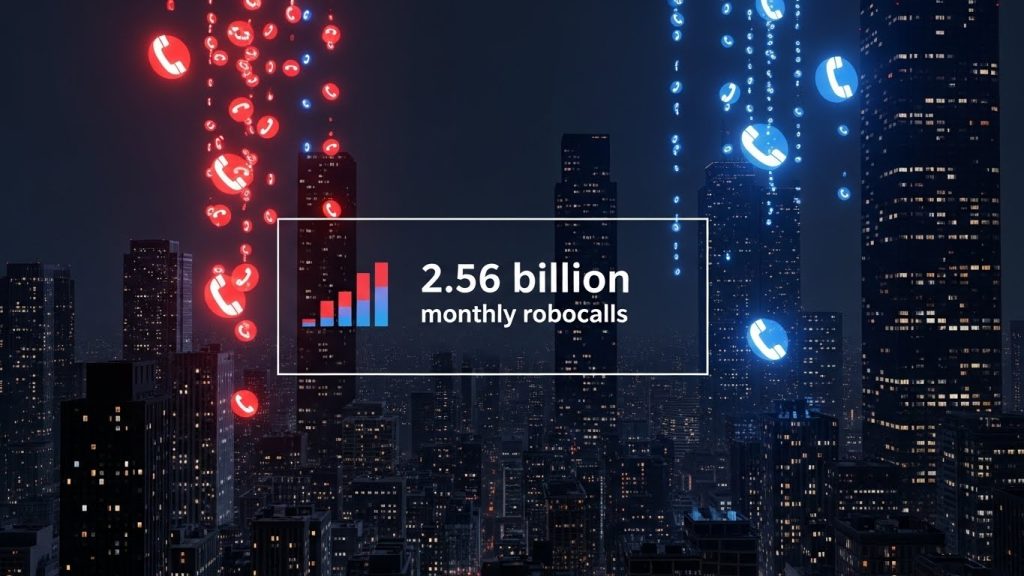
Americans received 2.56 billion robocalls per month in 2025—the highest level in six years, according to the U.S. PIRG Education Fund. That works out to roughly 14 spam calls per person, every single month. And if you feel like your phone rings more than everyone else’s, you’re probably right. Scammers don’t dial randomly. They target.
The frustrating truth? Your number ended up on scammer lists for specific reasons—and understanding those reasons is the first step toward reclaiming your peace. This guide breaks down exactly how your phone number became a target, why blocking individual numbers feels pointless, and the strategies that actually work to reduce unwanted calls.
Quick Answer:
You’re getting so many spam calls because your phone number was exposed through data breaches, sold by data brokers, or flagged as “active” when you answered previous spam calls. Once scammers know your number works, they resell it to others.
How Scammers Got Your Phone Number in the First Place
The answer likely isn’t one thing—it’s several. Phone numbers appeared in 39% of all data breaches in 2024, according to security research from Aura. But breaches are just one pipeline feeding the spam machine.
Data brokers operate legally in most states, scraping public records, social media profiles, and online directories to compile massive databases of personal information. They sell this data to marketing companies—and occasionally, those lists fall into less scrupulous hands. The FTC recently settled with Response Tree LLC, a company that collected phone numbers under the guise of mortgage refinancing quotes, then sold them to telemarketers making illegal robocalls about fake auto warranties and Social Security scams.
Have you ever entered a contest online? Signed up for a loyalty program at a store? Downloaded an app that asked for your phone number? Each of these actions potentially exposed your number to third parties. Even legitimate companies often include fine-print clauses allowing them to share your data with “partners.”
Here’s what makes the problem worse: once you answer a spam call, your number gets flagged as “active” and resold to other scammers at a premium. That single pickup can multiply your daily call volume dramatically.
Why Spam Calls Are Exploding Right Now
Technology made robocalling absurdly cheap. Voice over Internet Protocol (VoIP) allows anyone to make calls over the internet for fractions of a penny, and autodialers can blast millions of calls per day without human intervention. The FCC estimates U.S. consumers receive approximately 4 billion robocalls monthly—and the infrastructure to generate those calls costs scammers almost nothing.
Caller ID spoofing compounds the problem. Scammers manipulate the number displayed on your phone to show local area codes, familiar business names, or even government agencies like the IRS. This “neighbor spoofing” technique dramatically increases answer rates because people trust calls that appear local. The technology requires minimal technical knowledge—VoIP services let users set any number they want in their configuration settings.
AI voice cloning has entered the picture too. In early 2024, scammers used an AI-generated voice of President Biden to discourage New Hampshire voters from participating in the primary. The FCC responded by making AI-generated voices in robocalls explicitly illegal, but enforcement remains challenging when many operations run from overseas.
The financial incentive is staggering. Americans lost approximately $25.4 billion to phone scams over the past 12 months, with 56 million adults affected. Average losses reached $3,690 per victim for scam robocalls in 2025. When fraud generates billions in revenue, scammers will find ways around any obstacle.
The Different Types of Spam Calls Targeting Your Phone
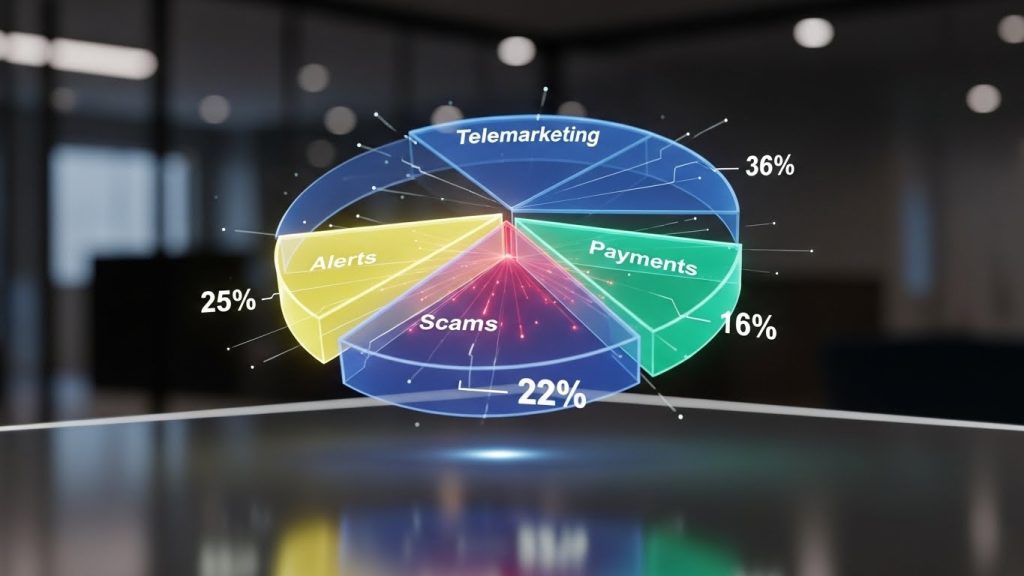
Not every robocall is a scam, but understanding the breakdown helps you assess risk. According to the YouMail Robocall Index, the calls hitting American phones in 2024 broke down roughly as follows:
- Telemarketing (36%): Product pitches, political campaigns, and promotional offers. Many are technically legal if you previously gave consent—even accidentally.
- Alerts and reminders (25%): School closings, flight updates, medical appointments, and delivery notifications. These are generally legitimate.
- Scam calls (22%): IRS impersonation, Social Security fraud, fake sweepstakes, tech support schemes, and bank account warnings.
- Payment reminders (16%): Overdue bills and credit card payment notices from real creditors.
The most dangerous calls often impersonate organizations you trust. Tech support scams (37% of reported fraud calls) typically claim your computer has a virus and request remote access. IRS scams (33%) threaten arrest unless you pay “back taxes” immediately. Lottery scams (32%) require upfront “fees” to claim fake winnings. If you’re unsure who’s calling, using a reverse phone lookup can help identify unknown or suspicious numbers.
Young adults aren’t immune—in fact, they’re increasingly targeted. People aged 18-34 now account for 46% of scam victims, while those 35-44 represent 51%. The stereotype of elderly victims no longer matches reality.
Why Blocking Numbers Feels Like a Losing Battle
You block a spam number. The next day, the same scam arrives from a different number. What gives?
Scammers rotate through thousands of spoofed numbers daily. The number displaying on your caller ID often belongs to an innocent person whose digits were randomly selected by spoofing software. Blocking that number accomplishes nothing because the scammer never actually used it—they just borrowed its appearance.
The STIR/SHAKEN protocol was supposed to fix this. Required by the 2019 TRACED Act, this caller ID authentication system verifies that calls originate from legitimate phone numbers. Major carriers like Verizon, AT&T, and T-Mobile have fully implemented it. But here’s the problem: as of September 2025, only 44% of phone companies have completely installed the mandated software and anti-robocall policies—down from 47% the previous year.
Smaller voice service providers, especially those acting as “gateways” for international calls, remain weak links in the system. The FCC has issued cease-and-desist orders against dozens of providers facilitating illegal robocall campaigns, but new bad actors continually emerge. In 2024 alone, the agency imposed fines exceeding $200 million on companies breaking robocall rules.
How to Actually Reduce Spam Calls on Your Phone
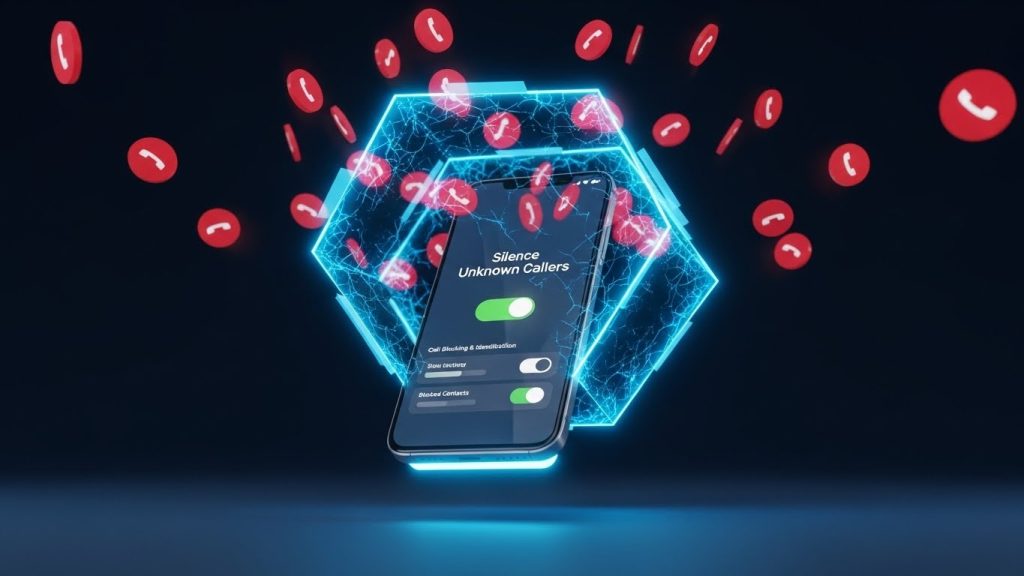
No solution eliminates 100% of unwanted calls, but layering multiple defenses dramatically reduces volume. Start with your carrier’s built-in tools—they’re free and surprisingly effective.
Enable carrier spam protection.
Verizon offers Call Filter, AT&T provides ActiveArmor, and T-Mobile includes ScamShield. These services automatically flag or block suspected spam using network-level analytics. T-Mobile’s “Scam Likely” labels have become particularly accurate.
Use your phone’s built-in features.
iPhone users can enable “Silence Unknown Callers” under Settings > Phone, which sends all calls from numbers not in your contacts directly to voicemail. Android’s Phone app includes similar screening options. Google Pixel phones feature “Call Screen,” which uses AI to answer and transcribe suspected spam calls before you decide whether to pick up.
Register with the National Do Not Call Registry.
Visit DoNotCall.gov or call 1-888-382-1222 to add your number. While scammers ignore this list entirely, legitimate telemarketers must honor it. Registration remains valid indefinitely.
Consider third-party apps for additional screening.
Apps like Nomorobo, Hiya, and YouMail maintain databases of known spam numbers and can block calls before they ring. Be selective—some lesser-known apps have been caught selling user data, according to TechCrunch investigations.
Never answer calls from unknown numbers.
If it’s important, the caller will leave a voicemail. Answering—especially saying “yes” to questions like “Can you hear me?”—confirms your number is active and monitored.
Limit where you share your number.
Use a secondary number from Google Voice for online forms, sweepstakes, and business inquiries. This keeps your primary number off marketing lists.
What To Do If You’ve Already Answered Spam Calls
Already picking up unknown calls regularly? The damage isn’t permanent, but recovery takes time.
Contact your carrier immediately to discuss enhanced spam filtering options. Ask specifically about network-level blocking for calls that fail STIR/SHAKEN authentication. Most carriers offer premium filtering tiers that block more aggressively than default settings.
Report illegal robocalls to the FTC at ftc.gov/complaint and the FCC at consumercomplaints.fcc.gov. These reports help regulators identify patterns and pursue enforcement actions. You can also forward suspicious text messages to 7726 (SPAM), which alerts your carrier.
Consider removing your information from data broker sites. Services like DeleteMe and Kanary automate the tedious process of submitting opt-out requests to dozens of people-search websites. Reducing your online footprint makes it harder for scammers to obtain your number in the first place.
Changing your phone number should be a last resort. It’s disruptive, requires updating accounts everywhere, and won’t necessarily solve the problem if your new number eventually gets scraped from the same sources. Securing your current number is usually more practical.
Taking Back Control of Your Phone
Spam calls aren’t going away soon—the economics favor scammers too heavily. But you’re not powerless. Enable your carrier’s spam protection today; it takes under five minutes. Add your number to the Do Not Call Registry if you haven’t already. Stop answering unknown numbers entirely, and start treating your phone number like the valuable piece of personal data it has become.
The 2.56 billion monthly robocalls hitting American phones represent a massive, automated assault on our attention. By understanding how your number became a target and implementing layered defenses, you can reduce the noise significantly. Your phone should connect you to people who matter—not anonymous scammers hoping you’ll pick up just once.